
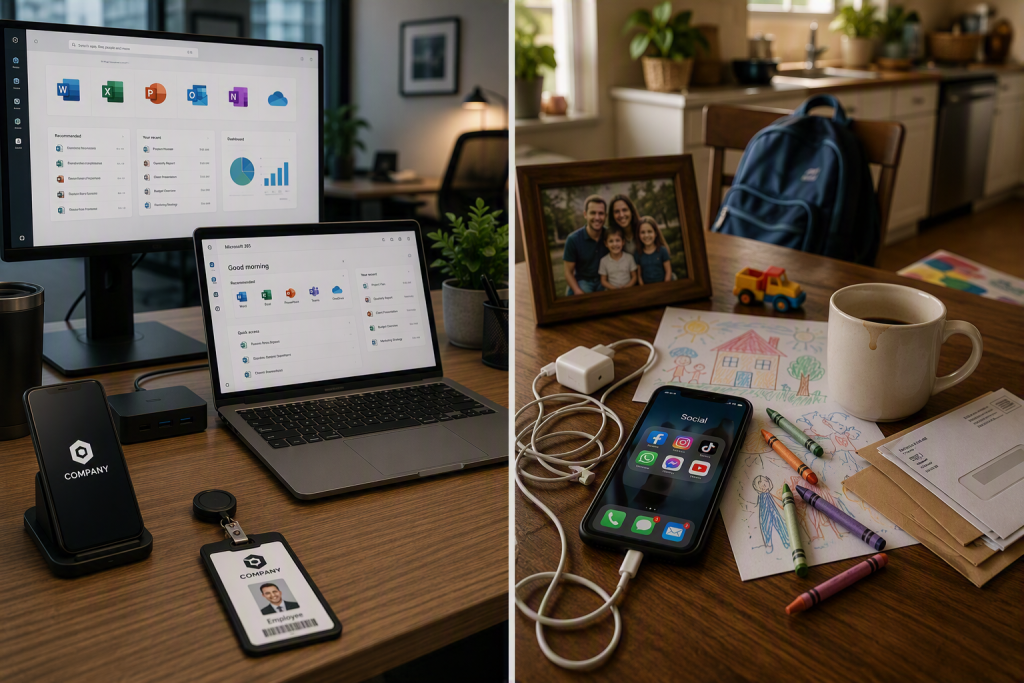
 Allowing employees to use their own phones or computers for work may seem convenient, but for most businesses, it creates more risk than benefit. While personal devices can make it easier to check email or join a meeting, they also make it much harder to control and protect company information.
For businesses, company-owned devices are usually the safer and more reliable choice. They provide better control over security, updates, backups, and access to business data. This is especially important when employees work with customer information, financial records, payroll, or other sensitive data.
If personal devices are allowed, businesses should limit what employees can access and ensure certain security standards are followed. Devices should be regularly updated, protected with a screen lock, and use multi-factor authentication for company accounts. Employees should also understand which applications are approved and whether business files can be downloaded or stored on their personal device.
Lost devices and employee departures can create additional challenges. A business should have a clear process for removing access to company systems, changing passwords when needed, and ensuring company information is deleted from the device.
In some situations, personal devices can work for limited tasks such as checking email or accessing approved business apps. However, when security, compliance, or sensitive information are involved, a company-owned device is almost always the better option.
If you’re unsure whether employees should use personal devices in your business, Wingman IT Services can help you create clear policies that protect your company while keeping your team productive. Contact us to discuss the best approach for your business.