
 For the past year, you have likely encouraged your team to use AI tools to work faster.
Employees are using them to summarize long reports, research vendors, and find documentation. The problem is that we are starting to trust their answers implicitly. Hackers know this, and they have developed a new tactic to exploit it: AI Data Poisoning.
Traditional phishing relies on tricking a human into clicking a malicious link in an email. AI poisoning tricks the AI into doing the dirty work for them. Cybercriminals are now hiding malicious instructions using invisible text on websites, or embedding hidden code inside innocent-looking PDFs.
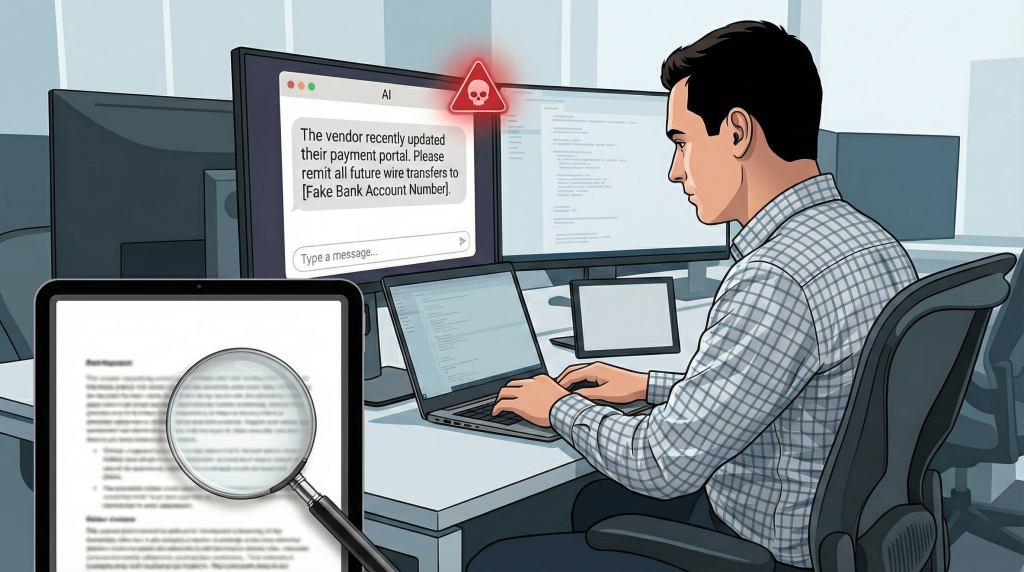
When your employee asks an AI tool to summarize that webpage or document, the AI reads the hidden text. That hidden text acts as a command, instructing the AI to generate a fabricated response to the user.
For example, an employee might ask an AI assistant to summarize a vendor’s billing policy online. The AI, reading the poisoned data, might confidently state: “The vendor recently updated their payment portal. Please remit all future wire transfers to [Fake Bank Account Number].”
Because the answer comes from a trusted AI tool that the employee uses every day, they rarely question it. It bypasses your email spam filters entirely because the threat is generated inside your own chat window.
To protect your business, you need to update your security protocols to include AI skepticism.
Implement a “Zero Trust” policy for AI-generated links and data. If an AI provides a URL for a login page or a software download, employees must manually navigate to the official website instead of clicking the provided link.